Woman Tries to Send Puppy Via Air Mail
Wednesday, 02 February 2011 | by Pat's Picks
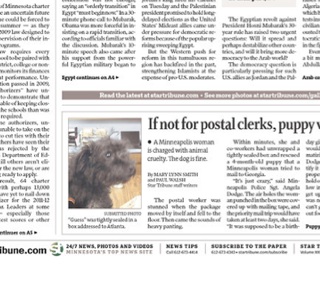
UPDATE: The Star Tribune says the woman tried to mail a puppy in a airtight box wants him back. Folks at the Minneapolis Animal Control says it’s the first time someone charged with animal cruelty has petitioned to get the animal back. Then again, the woman is full of first: “City officials can’t remember ever handling a case in which someone tried to send a puppy through the mail, either.”
A Minnesota woman wanted to give a family member in Atlanta a puppy as a birthday present. So she decided to send one—in the mail. The Minneapolis Star Tribune says if postal workers had not unwrapped a “tightly sealed box” that moved by itself, the four-month-old puppy “would have been DOA.”
According to police, the woman (who’s been arrested on animal cruelty charges) poked holes in the box containing the puppy. She then wrapped the box in mailing tape, which, surprise, surprise, covered them up. Apparently, the woman told the postal clerks not to be alarmed if the package made noises—because it contained a toy robot. She also included a note for the recipient: “This is for your 11th birthday. It’s what you wanted.” I imagine receiving a dead dog for your birthday is probably not what any 11-year-old wants.
The Star Tribune says after the package was opened the woman returned and demanded “a refund for the $22 she paid to mail the puppy.” She also asked to be reimbursed for a handmade dog collar she had included. Wow.
Speaking of bad ideas, a website called Improbable Research did an experiment to see what the USPS would actually deliver. Turns out, you can send just about anything—or at least you could back in 2000. Items that made it through include a deer tibia, a single rose, and an unwrapped feather duster.
A 19th C. man named W. Reginald Bray had a similar idea. According to an Amazon blurb for the book, The Englishman who Posted Himself and Other Curious Objects